

Spot Red Flags Before Fraudulent Contractors Strike
Expert guidance for homeowners
The Bait-and-Switch Pricing Trap
When summer temperatures soar in Kearns, a broken air conditioner feels like an emergency. Dishonest contractors exploit this vulnerability by offering unbelievably low initial quotes to get in your door, then drastically inflate prices once the work begins.
This scam typically unfolds in stages. A technician arrives and performs what appears to be a thorough inspection. Suddenly, they discover additional problems that were not visible during the initial assessment. The $99 tune-up transforms into a $1,200 compressor replacement, often accompanied by urgent warnings that your system could fail completely without immediate repairs.
Legitimate service providers understand that accurate diagnostics require time and expertise. They provide detailed written estimates before starting any work and explain exactly what they found, why repairs are necessary, and what alternatives exist. They never pressure you to make immediate decisions about expensive repairs.
To protect yourself, always request itemized quotes that break down labor costs, parts expenses, and any diagnostic fees. Compare these quotes with industry standards for your region. If a contractor refuses to provide written documentation or pressures you to decide immediately, consider this a major warning sign. Reputable companies operating in Kearns will honor their initial assessments and only recommend additional work when genuinely necessary, always giving you the option to obtain a second opinion before proceeding.

The Unnecessary Refrigerant Recharge
Refrigerant operates in a closed-loop system, which means your air conditioner should never need additional refrigerant unless there is a leak. Yet one of the most common scams involves technicians claiming your system is low on refrigerant and needs an expensive recharge.
Fraudulent contractors often target homeowners who notice their system is not cooling as effectively as it once did. They skip proper diagnostic procedures and immediately recommend adding refrigerant without checking for leaks or examining other potential causes like dirty coils, clogged filters, or electrical issues.
Adding refrigerant without fixing an underlying leak is not just wasteful; it is ineffective. The refrigerant will simply leak out again, leaving you with the same problem and an empty wallet. Additionally, some dishonest technicians claim they added more refrigerant than they actually did, charging you for multiple pounds while adding only a fraction of that amount.
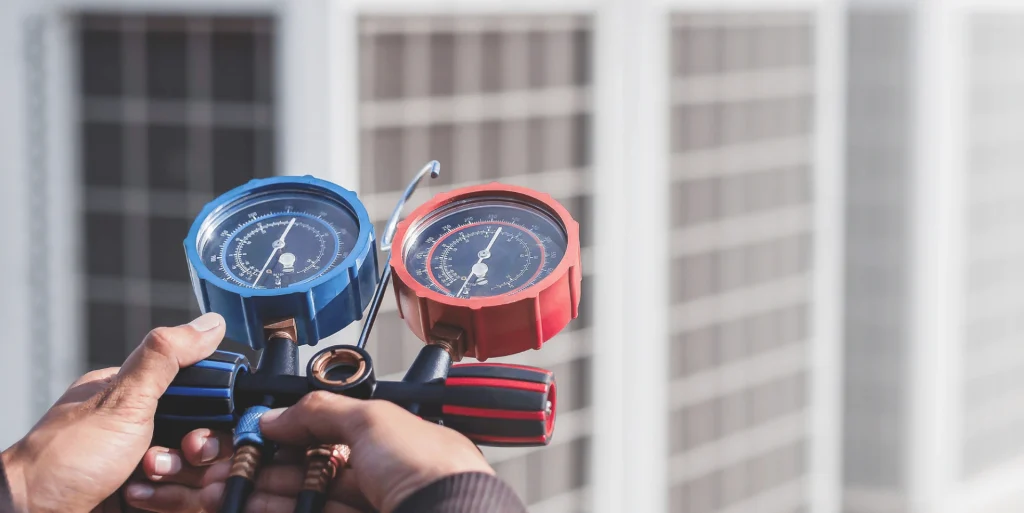
An honest technician will always perform a thorough inspection before recommending a refrigerant recharge. They will check for leaks using proper detection equipment, test system pressures, and examine all components that could affect cooling performance. If they do find a leak, they will locate and repair it before adding any refrigerant. They should also provide documentation showing exactly how much refrigerant was added and at what cost. During Kearns’ hot summer months when systems work overtime, reduced efficiency is common, but refrigerant loss should never be the automatic assumption without proper testing.
The Oversized Equipment Upsell
When your heating or cooling system reaches the end of its lifespan, replacement becomes necessary. Unscrupulous contractors see this as an opportunity to sell you a much larger, more expensive unit than your home actually requires.
The pitch sounds logical at first. A bigger furnace will heat your home faster. A larger air conditioner will keep you cooler during heat waves. In reality, oversized equipment costs more upfront, increases your energy bills, and actually performs worse than properly sized systems.
Oversized air conditioners cool spaces too quickly, cycling on and off repeatedly without running long enough to remove humidity from the air. This creates uncomfortable, clammy conditions even when temperatures seem correct. Oversized furnaces create similar problems, producing uneven heating and wasting energy through frequent cycling.
Proper equipment sizing requires careful calculation based on your home’s square footage, insulation levels, window placement, ceiling heights, and climate zone. Legitimate contractors perform load calculations using industry-standard methods before recommending specific equipment. They consider factors like how your home is oriented relative to the sun, how many occupants typically live there, and what kind of insulation exists in walls and attics.
Homes in Kearns face unique challenges with temperature swings between seasons and the need for both robust heating and reliable cooling. This makes proper sizing especially important. Be skeptical of any contractor who recommends equipment based solely on your home’s square footage or who pushes the largest available model without performing detailed calculations. Request documentation of the load calculation and ask questions about how they arrived at their recommendation. A trustworthy provider will gladly explain their methodology and show you the math behind their suggestion.

The Phantom Part Replacement
One of the most brazen scams involves charging homeowners for parts that were never actually replaced. The technician claims to have installed a new capacitor, contactor, or another component, but in reality, they either installed a used part, cleaned the existing part, or did nothing at all.
This scam is particularly difficult for homeowners to detect because most people cannot easily identify whether a specific component inside their system is new or old. Fraudulent contractors rely on this knowledge gap, betting that you will not inspect the work or know what to look for even if you do.
Some variations of this scam involve installing substandard or incorrect parts while charging for premium components. The system may work temporarily, but these inferior parts fail quickly, bringing the contractor back for another lucrative service call.
Protecting yourself requires asking for the old parts when replacements occur. Legitimate contractors routinely show customers failed components and explain what went wrong. They will provide the old part so you can see the damage or wear for yourself. They should also provide documentation including part numbers, brand names, and warranty information for any components they install.
Take photographs of your system before and after service calls. While you may not know what every component does, having a visual record can help if you need to verify that work was actually performed. Ask technicians to show you exactly which part they replaced and where it is located in your system. Request invoices that specify part numbers rather than generic descriptions. When working with any service provider in Kearns, particularly during the busy seasons when HVAC systems work hardest, documentation becomes your strongest defense against fraudulent practices.
The High-Pressure Emergency Replacement
Perhaps the most stressful scam involves creating a false sense of emergency to pressure homeowners into immediate, expensive system replacements. The technician arrives for what should be a routine service call, then delivers alarming news: your system is dangerous, completely beyond repair, or about to fail catastrophically.
They might claim your heat exchanger has cracks that are leaking deadly carbon monoxide into your home. They may insist your air conditioner compressor is about to explode. Whatever the specific claim, the message is the same: you must replace your entire system immediately, and they happen to have a crew available to do the work today if you sign the contract right now.
This scam weaponizes fear and urgency against homeowners. No one wants to put their family at risk or face a mid-winter furnace failure. The pressure to make an immediate decision prevents you from getting second opinions, researching options, or even thinking clearly about whether the diagnosis makes sense.
Legitimate safety concerns do occasionally arise with heating and cooling systems. However, honest contractors handle these situations very differently. They clearly explain what they found, show you the problem if possible, and discuss your options without applying pressure. They understand that replacing a major home system is a significant decision that deserves careful consideration.
If a contractor claims your system poses an immediate safety hazard, ask them to show you the specific problem. Request documentation including photographs. Get a second opinion before authorizing any major work. If they claim the situation is too dangerous to leave the system running, ask them to disable the unsafe component and provide temporary alternatives while you arrange for independent verification.
Working with established local businesses provides an important layer of protection against this scam. Companies with long-standing reputations in Kearns cannot afford to build their business on high-pressure tactics and false emergencies. They understand that honest service creates loyal customers who return for years and recommend their services to neighbors and friends. When you face a significant decision about system replacement or major repairs, taking time to verify the diagnosis and explore your options is not just reasonable; it is the responsible approach to protecting both your home and your financial wellbeing.

Watch for several warning signs that indicate a contractor may not have your best interests in mind. If they refuse to provide written estimates before starting work, pressure you to make immediate decisions without time to consider your options, or quote unusually low prices that seem too good to be true, proceed with caution. Honest contractors will always explain their findings in detail, show you the problematic components when possible, and allow you time to get second opinions on expensive repairs. They provide itemized invoices with specific part numbers and labor costs rather than vague descriptions. If a technician claims your system needs major repairs or replacement without performing thorough diagnostics, or if they create a sense of urgency by claiming dangerous conditions exist without proper documentation, these are red flags that warrant seeking another professional assessment.
Refrigerant operates in a closed-loop system, which means your air conditioner should maintain consistent refrigerant levels throughout its lifespan under normal circumstances. When refrigerant levels drop, this indicates a leak somewhere in the system. Leaks can develop from various sources including corroded coils, loose connections, damaged service valves, or physical damage to refrigerant lines. Manufacturing defects, improper installation, or normal wear over time can also create leak points. The key point to understand is that low refrigerant is always a symptom of a leak, not a maintenance issue that requires periodic top-ups. Any technician who recommends adding refrigerant should first locate and repair the leak. Simply adding refrigerant without fixing the underlying problem wastes money and fails to address the actual issue, as the refrigerant will continue leaking out.
Absolutely. Replacing a heating or cooling system represents a significant financial investment, typically ranging from several thousand to over ten thousand dollars depending on your home size and equipment selection. Getting a second opinion protects you from unnecessary replacement recommendations and ensures you receive accurate sizing calculations and fair pricing. A second assessment can confirm whether your existing system truly cannot be repaired economically or if a less expensive repair would provide additional years of service. Different contractors may also offer varying equipment options, warranty terms, and financing arrangements that could save you considerable money. The cost of a second diagnostic visit is minimal compared to the potential savings from avoiding an unnecessary replacement or identifying a more cost-effective solution. Reputable contractors will never object to you seeking additional opinions, as they understand that informed homeowners make better decisions and become more satisfied customers.
The decision between repairing and replacing depends on several factors including the age of your system, the cost of repairs relative to replacement, and the frequency of breakdowns. As a general guideline, if repair costs exceed half the price of a new system and your equipment is more than 10 to 15 years old, replacement often makes better financial sense. However, many individual components like capacitors, contactors, or thermostats cost relatively little to replace and can extend your system’s life for several more years. Consider the cumulative repair history as well. If you find yourself calling for service multiple times per year, the ongoing expense and inconvenience may justify investing in new equipment. Energy efficiency also factors into this decision. Newer systems operate significantly more efficiently than models from 15 or 20 years ago, so replacement can reduce monthly utility costs. A trustworthy technician will help you understand these trade-offs honestly and make recommendations based on your specific situation rather than pushing the most expensive option.
Legitimate emergencies involve verifiable safety hazards or conditions that will cause immediate, significant damage if not addressed. For example, a cracked heat exchanger that tests positive for carbon monoxide leakage represents a real safety concern that requires immediate attention. A technician addressing a genuine emergency will show you the specific problem, provide documentation such as photographs or test results, and explain clearly why immediate action is necessary. They will also discuss your options, which might include temporarily disabling the unsafe component while you arrange repairs or get a second opinion. False urgency scams, by contrast, rely on vague warnings, refuse to provide evidence, and insist you must sign a contract immediately without time to verify their claims or explore alternatives. Fraudulent contractors often claim they happen to have a crew available right now or offer a special discount that expires today. They discourage second opinions and become defensive when asked to document their findings. Genuine safety concerns deserve prompt attention, but even true emergencies allow time for you to make informed decisions about how to proceed.
